RV Propane Tank Repair: Regulators, Leaks, and When to Replace a Tank
By Gus Amundsen · October 29, 2026
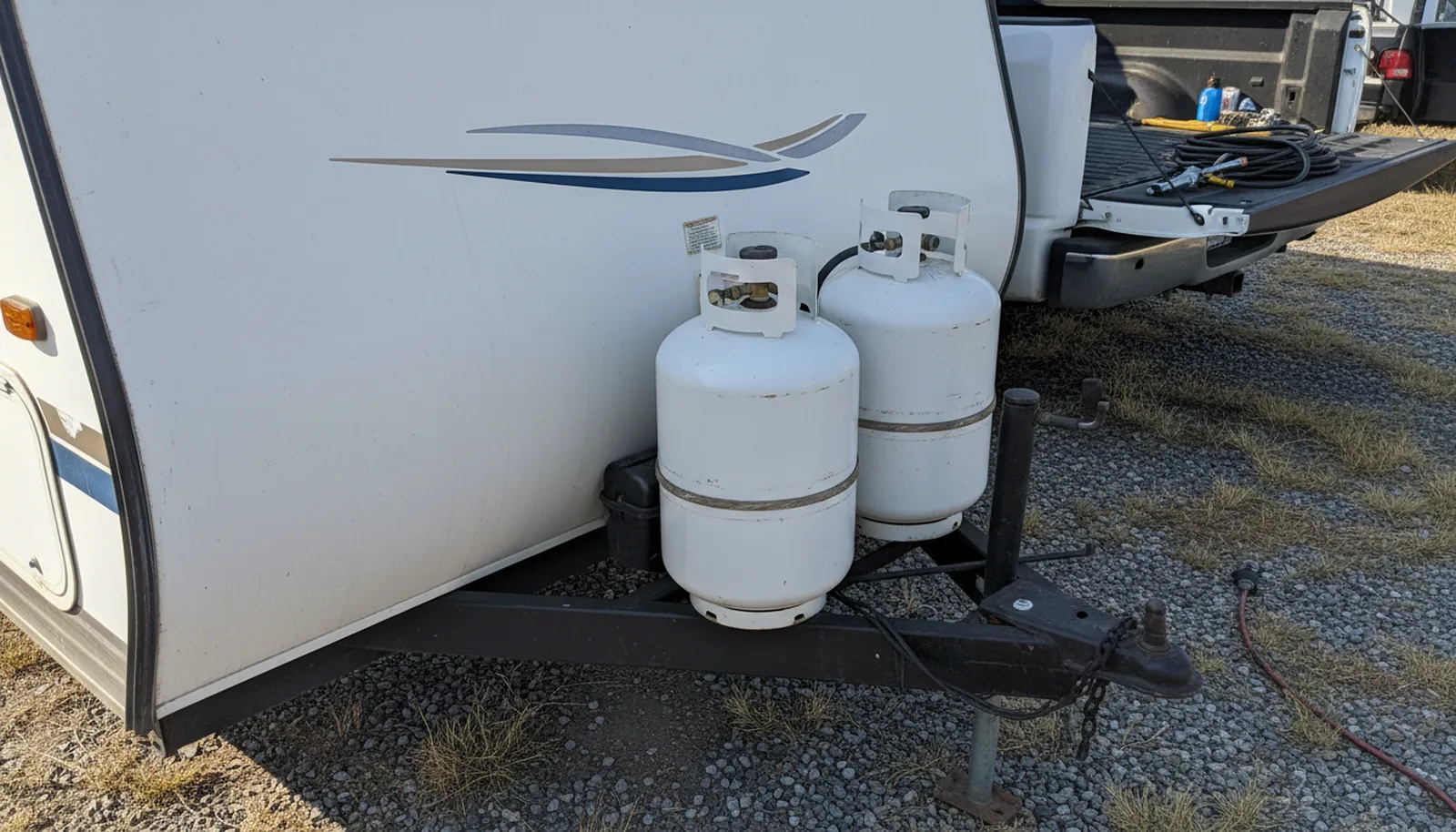
It was a Denver October morning, 34 degrees, and my fifth wheel’s furnace lit, ran two minutes, then dropped out. That kind of problem would have sent me looking for RV repair shops in California if I’d been out there. After the third cycle I walked outside and saw frost on the regulator, a classic sign that mobile RV repair techs in Sacramento see on propane systems. Different trouble than needing AC repair in Sacramento. I’d seen that on a mountain cabin’s tank once years back, a tired regulator that couldn’t hold pressure under load. So I replaced it and the pigtails, and the furnace ran all winter. Now if I’d been dealing with awning repair in Sacramento, that woudl have been a whole other job. That was one morning of RV propane tank repair. But if you’re in Northern California and don’t want to do it yourself, mobile RV techs in Sacramento can handle it.
Propane Tanks on RVs: DOT Cylinders vs. ASME Tanks
Towables like my fifth wheel and most travel trailers carry removable DOT cylinders, and knowing which tank you have tells you what repair even means. Usually 20 or 30 pounders, sometimes 40. And they’re nothing like the body work you’d need for collision repair in Sacramento. These tanks sit on the tongue, get refilled or swapped, and must be requalified within 12 years of manufacture, then every 5 years with a visual inspection. Which is a far cry from electrical repair in Sacramento. Built-in ASME tanks on motorhomes are a different animal. They’re welded into the frame, hold more propane, and don’t get requalified on that schedule. When an ASME tank rusts out or gets dented, you replace it. That means a shop and deeper labor.
The Regulator: Why Frost Means Your Pressure Is Dropping
The frost I saw that October morning was the regulator telling me it was done. Every RV propane system has at least one regulator. Most two-tank setups on towables use a two-stage automatic changeover regulator. It knocks tank pressure down to about 11 inches of water column, about 0.4 psi, before the appliances see it. When a regulator diaphragm tires out, it can’t keep up with a furnace or water heater pulling hard. The visible sign is frost or ice on the regulator body while appliances run. Propane is refrigerating itself as it expands through a leaking or sticking valve. Weak flames, burners that take forever to light, appliances that cut out mid-cycle. All point the same way. The same low-pressure symptoms show up in RV refrigerator repair calls on absorption fridges. I replace regulators at ten years even if they look fine. A two-stage changeover regulator runs roughly $25 to $70, pigtails $15 to $25 each. Labor at a shop or through a mobile tech adds trip fees and an hour, offen $100 to $200 total for a towable.
Low Flow After a Refill: The Excess-Flow Valve and How to Reset It
You pick up a refilled cylinder, reconnect it, and the stove won’t light or the furnace huffs, and the fix is simpler then most people think, but it requires patience. Nine times out of ten, the excess-flow valve tripped because the tank valve opened too fast when the system was empty. That valve is a safety device in the tank’s OPD assembly. It slams shut when propane rushes out too quickley. Close the tank valve fully. Go inside and turn off all gas appliances. Open the tank valve slowly, over about five seconds, then wait 20 seconds before lighting anything. If you trip it again, close, wait a minute, and reopen even slower. That lets the lines pressurize gently. If low flow persists, suspect a collapsed hose, a plugged pigtail, or a regulator that’s actually failed.
Detecting Leaks: Soapy Water, Not a Flame
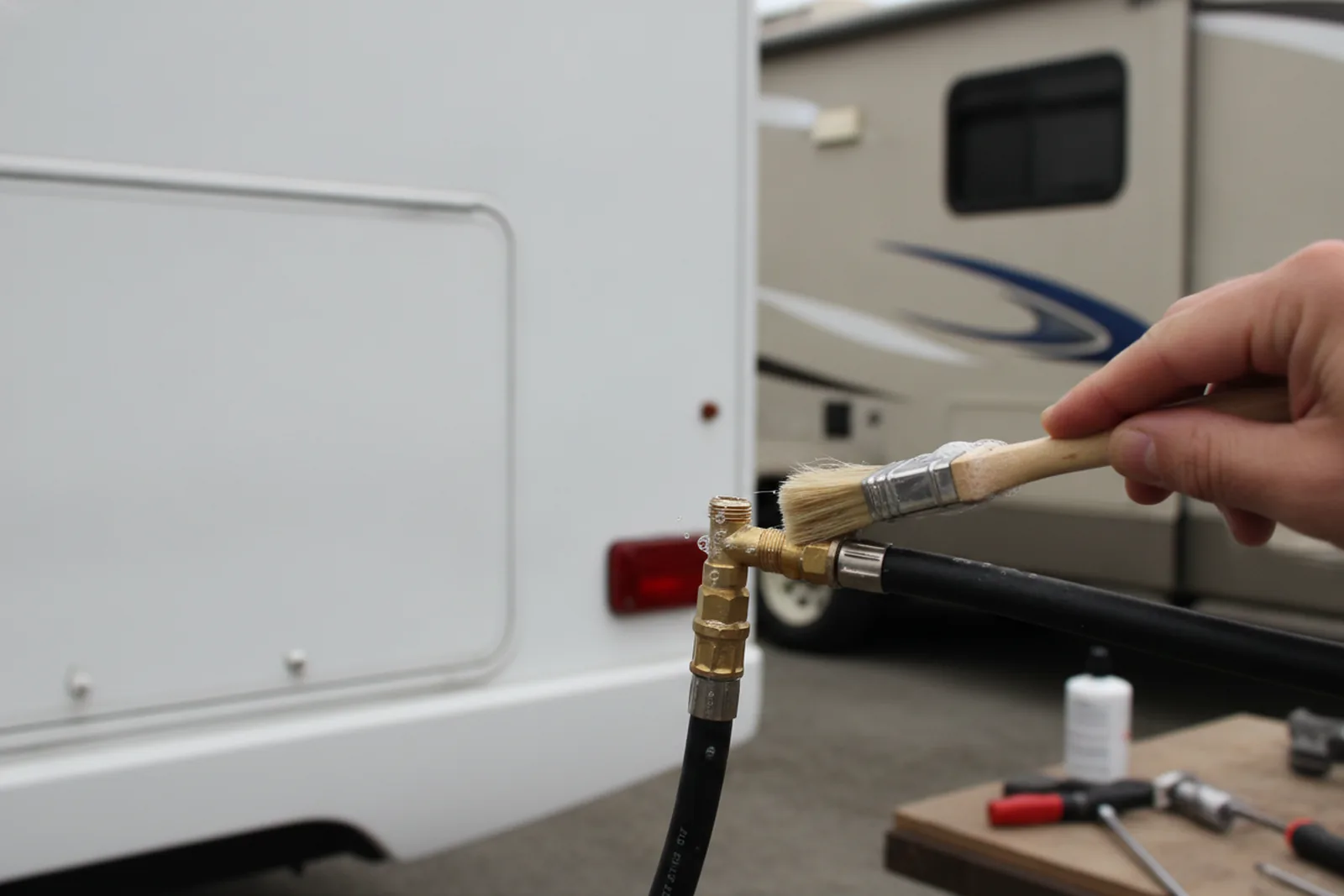
If you smell propane, shut the tank valves, get everyone out, and don’t touch any switches or flames. And while you’re up top checking vents, see our guide to how to repair RV roof leaks. Ventilate the compartment if you can, then call a pro unless you’re sure the leak is somewhere you can safely reach. For routine checks, I use a commercial leak detector solution or a small bottle of soapy water. Brush or spray every joint: tank connection, pigtail flare nuts, regulator outlet, hose ends, appliance valves. Bubbles mean a leak. Tightening a loose flare nut is a repair. A bubbling regulator diaphragm or a leaking tank valve often means replacement. Never use a flame to find a leak. LP detectors in the coach also expire, usually at 5 to 7 years; write the install date on the detector with a marker.
RV Propane Tank Repair FAQ: OPD Valves, Requalification, and When a Tank Is Scrap
| Tank Issue | Repair? | Replace? | Cost Notes |
|---|---|---|---|
| Stuck OPD valve (won’t fill) | Sometimes cleaned by a propane dealer | Replace if it won’t seal | Valve about $20-$50, labor small, but many dealers won’t touch an old tank |
| Rust or deep dents | No repair | Replace, cylinder is scrap | New DOT cylinders about $60-$150 depending on size |
| Damaged collar or foot ring | No repair | Replace, can’t transport safely | Same as above |
| Expired requalification date (over 12 years) | Requalification by a certified dealera | Replace if it fails inspection | Requalification often $15-$30; replacement bypasses the hassle |
| Leaking pigtail or hose | Replace pigtail/hose | Rarely worth trying to patch | Pigtails about $15-$25 each, hoses about $20-$50 |
| Regulator fatigue (frost, weak flames) | Replace regulator | Regulators are not repairable | Regulator $25-$70 part, plus labor |
A stuck OPD valve that won’t let a tank fill is a common call. That little plastic float inside the valve is a safety device that stops overfilling. It gets sticky with age, residue, or a drop. If the fill station can’t get propane in, don’t force it. Take the tank to a propane dealer that services cylinders; they can free it, but often the valve is replaced or the tank goes to scrap. I’ll replace a DOT cylinder before I spend an hour fighting a 15-year-old valve.
I found this walkthrough that shows common propane issues and how to solve them, it might help you see what’s going on.
After a Repair: Testing the Whole System
Air leaks into the lines when you disconnect a tank to replace a regulator or pigtail, so after any propane work, close the tank valve, turn off all appliances, then open the tank valve halfway. Go inside and light the stove burners first, one at a time, to purge air from the lines. The stove is the most forgiving appliance and gets you a flame at the far end. Once the stove burns clean blue, try the furnace and water heater. A quick leak check with soapy water on every joint I touched is the final step. I also verify the regulator lock-up pressure: with all appliances off and the tank valve slowly fully opened, no pressure shoudl bleed past the regulator. You can’t read that without a manometer, but a good tech has one on the truck. A mobile tech doing a furnace diagnosis will often check the propane side first. Low pressure causes more nuisance lockouts than a bad sail switch.
When an ASME Tank Means a Shop Visit
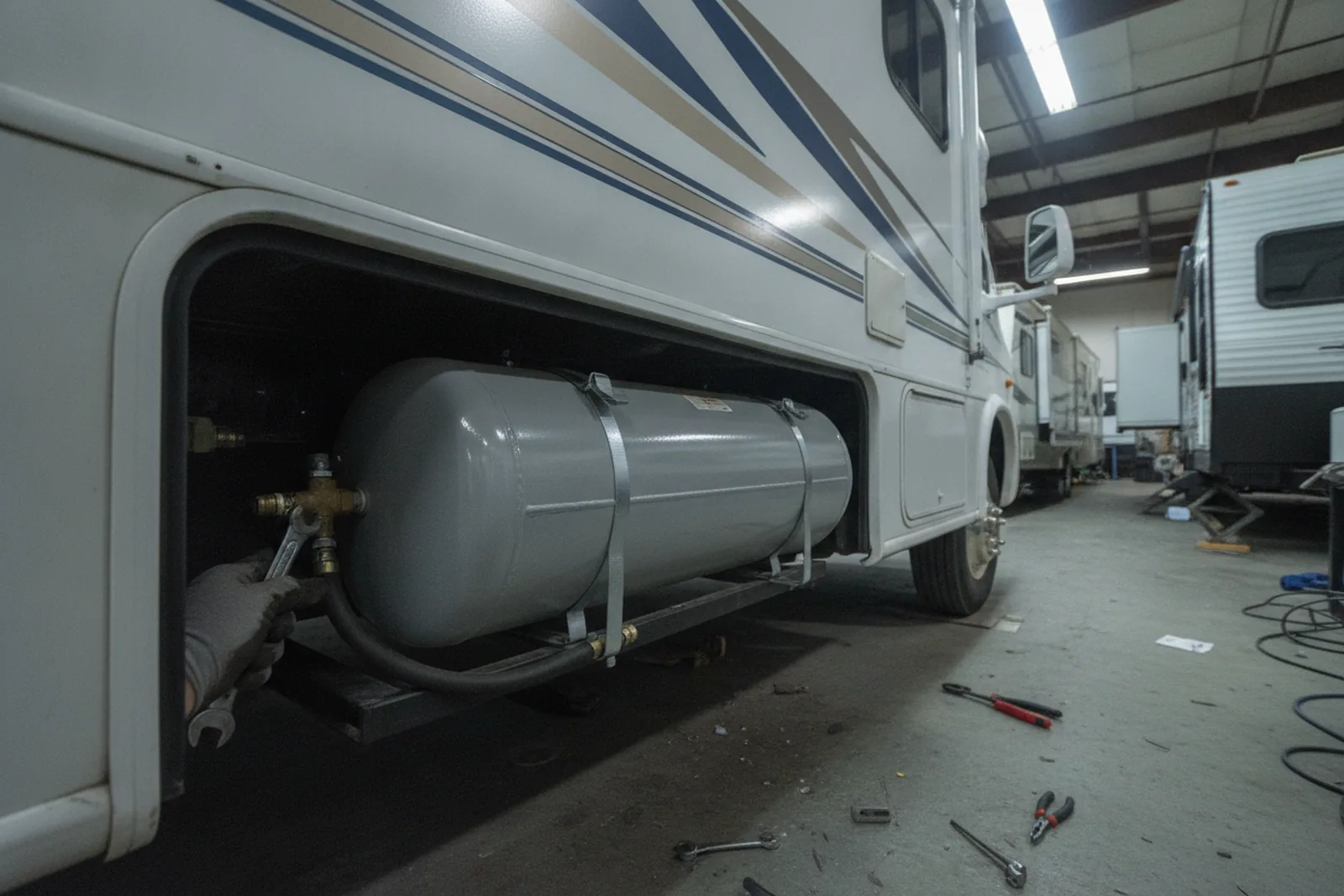
Motorhome owners face a different repair equation: that built-in ASME tank can’t be lifted off and swapped. If the tank itself leaks, the regulator is welded inside the frame rail and the hoses are routed behind heat shields, consider it a shop repair. Replacing an ASME tank on a Class A or Class C means draining the old tank down to empty, purging it with nitrogen, disconnecting the hard lines, and unbolting the tank from the frame. Then the new tank gets mounted, the regulator and lines replaced, and the whole system leak-tested with a manometer. Shop labor for that job runs several hours at $130 to $180 an hour plus the tank itself, which varies widely by size. It’s not a driveway job unless you’re certified and patient. For anything involving a built-in tank, I’d start with that phone call.
The Ten-Year Swap I’d Make This Weekend
I’ve learned to replace my towable’s regulator at the ten-year mark wether it’s acting up or not. It’s a $25 to $70 part and two pigtails. A job I can do in about 30 minutes with a crescent wrench and a bottle of soapy water. The alternative is waking up to a cold rig on a hunting trip and blaming the furnace when it was never the furnace.
If you smell gas, shut the tank and get everyone out. But if your appliances are acting weak, frosted up, or just won’t stay lit, start with the regulator and the pigtails. Pull up mobile RV techs near you who list propane work and ask two of them for a written estimate. Ask about thier trip fee and whether they leak-test the whole system after the repair. That phone call is cheaper than a night of troubleshooting in the dark.
Related reading
FAQ
How long does an RV propane regulator last?
Most regulators last roughly 10 to 15 years, but I replace mine at 10. The diaphragm and seat wear out from pressure cycles, weather, and contamination. Signs of a failing regulator are frost on the body, weak or sooty flames, and appliances that cut out under load. A new two-stage changeover regulator runs about $25 to $70.
Why won’t my RV propane tank fill up?
The OPD valve inside the tank may be stuck. That’s the overfilling protection device with a float that closes the fill path when the tank reaches 80 percent. If the float sticks from age or gunk, the fill hose can’t push propane in. Take the tank to a propane dealer that services cylinders; they can sometimes free it, or they’ll replace the valve.
Can I repair a dented or rusty RV propane tank?
No. DOT cylinders with dents, deep rust, a damaged collar, or a bent foot ring must be taken out of service and scrapped. A damaged tank can fail under pressure. Replacement is the the only safe option; a new 20-pound cylinder is roughly $60 to $100, and larger tanks cost more.
Why do I have low propane flow after refilling my tank?
The excess-flow valve in the tank tripped because the tank valve was opened too quickly when the system was empty. Close the tank valve, turn off all appliances,then open the valve slowly over about five seconds. Wait 20 seconds before lighting anything. If flow stays low, check for a collapsed hose or failed regulator.
How do I check for propane leaks on my RV?
Use a commercial leak detector solution or soapy water. With the tank valve open and appliances off, brush or spray every joint, including tank connections, pigtail flare nuts, regulator outlet, and hose ends. Bubbles indicate a leak. Tighten loose flare nuts, but a leaking regulator or tank valve usually means replacement. Never use a flame.
When should I replace the pigtails on my propane tanks?
Replace pigtails every few years or when they look stiff, cracked, or the rubber is deteriorating. Pigtails are under tank pressure and UV exposure on the tongue makes them brittle. They’re cheap, about $15 to $25 each, and a leaking pigtail is a fire hazard. Replace them whenever you replace the regulator.
How do I reset the excess-flow valve on an RV propane tank?
Close the tank valve completely. Turn off all gas appliances inside the RV. Wait a minute, then open the tank valve as slowly as possible, taking about five seconds to fully open. Some techs crack it open briefly, close it, then open slowly. This lets the lines pressurize gently without tripping the valve again.
Find RV repair near you
Compare RV service centers and mobile techs in your city, then ask a few for a quote on the job.
Browse by stateOr jump to: Billings, MT · Ocala, FL · Bakersfield, CA