RV Water Heater Repair: Find the Fault Before You Buy a Part
By Gus Amundsen · September 30, 2026 · updated October 5, 2026
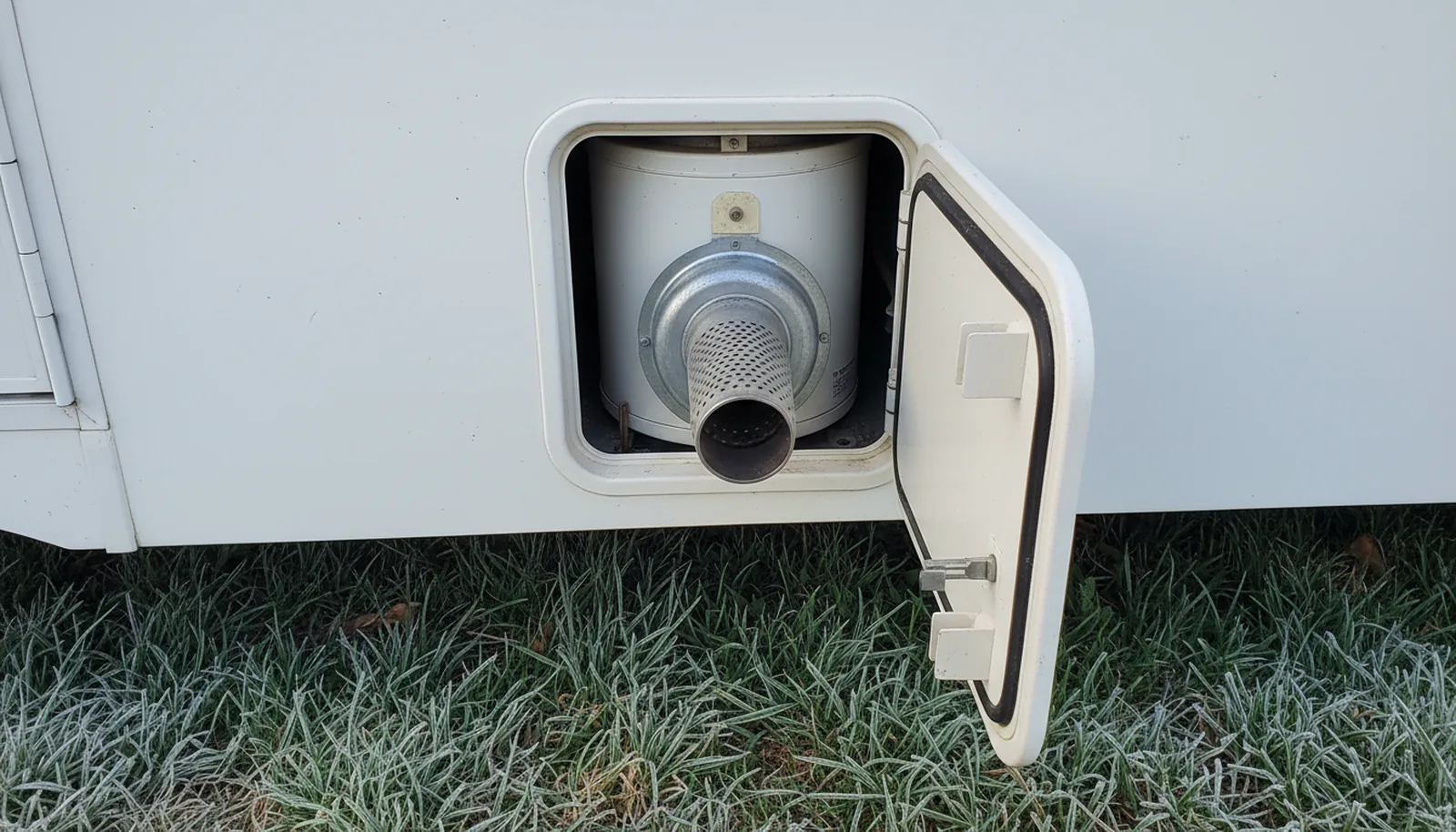
Last February I woke up in my fifth wheel at a state park outside Kansas City. Nine degrees. The water heater was dead. I flipped the propane switch, heard the igniter click a few times, then nothing. (I still check RV repair shops in Denver every few months just to see what folks are charging.) Twenty years of fixing furnaces in Denver told me to look for the dumb thing first. Found it too. A mud dauber nest plugging the burner tube.
That morning cemented my one rule: find the fault before you buy a part. Most water heaters that “don’t work” are one clog, one loose wire, or one flipped bypass valve away from working fine. If yours turns out worse, there are plenty of RV repair shops in Denver that can help, but you probaly won’t need one.
Know which water heater you have before you touch it
Walk outside, open the access door, and read the label. That label tells you whether you have a steel tank or an aluminum tank, and it matters because the two are not treated the same.
Steel tanks use a sacrificial anode rod that threads into the tank from outside. Check it yearly and replace it when it’s about 75 percent eaten. Aluminum tanks have no anode, just a plain drain plug, and you never put an anode in one.
Tankless water heaters work differently. No tank, no anode, just a burner and a heat exchanger. They’re on newer rigs and they carry there own quirks, mostly around flow rate and cold water sandwich. If yours is tankless, stop here and go read the manual because the rest of this post is about tank units.
First thing after that label check: turn the water heater off and let it cool before you open anything.
Safety first, then start with the simple checks
Never work on a hot, pressurized water heater. That’s the whole section in one sentence, and I mean it.
Here’s the order I follow:
- Check voltage. A resting battery at 12.0 volts or below is close to empty, and many RV appliances act up before that. Plug in, run the generator, or let the truck charge the battery.
- Check propane. Is the tank valve open? Does the stove burner light readily? If the stove sputters, air is in the line. Light the stove and let it burn for a minuite to purge air, then try the water heater.
- Check the outside. Look inside the burner tube for spider webs, mud dauber nests, or any obstruction. That’s what killed mine off I-70. A piece of coat hanger and some compressed air fixed it in five minutes.
- Check the igniter. With the access door open, watch the electrode. You should see a blue spark and hear a snapping sound. If not, the electrode is dirty, misaligned, or the DSI board is dead.
Propane side: from mud daubers to the DSI board
Most propane water heaters use direct spark ignition, or DSI, and most of the time the problem is not the board. It’s something simpler upstream.
Here’s the sequence I run when a propane side won’t fire, in order of what I actually see in the field:
- Air in the line. After a refill, light the stove and let it burn until the flame runs steady.
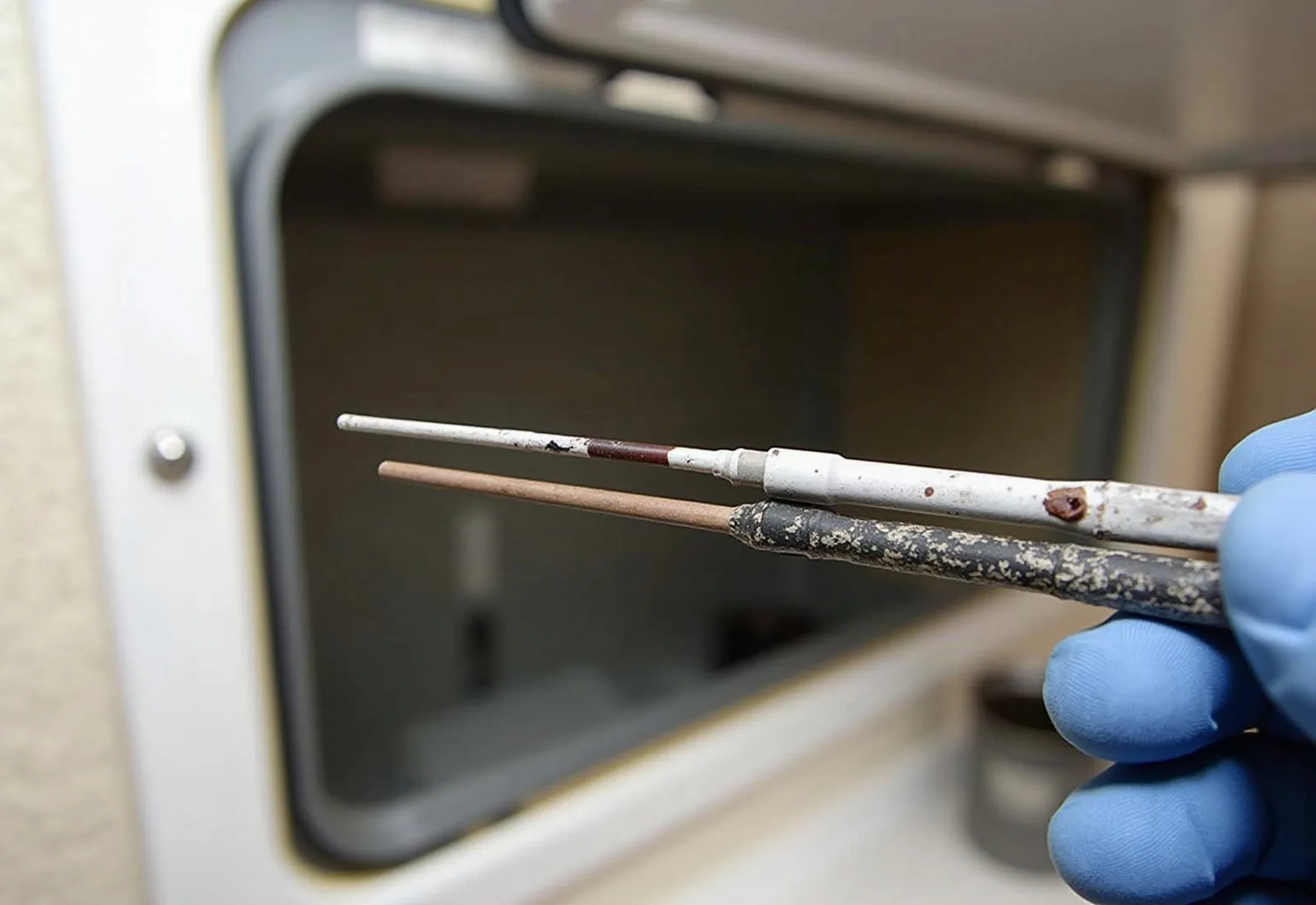
- Bad igniter electrode. The gap between electrode and burner should be about 1/8 inch. Carbon build-up or rust can insulate it. Clean with sandpaper and set the gap.
- Failed DSI board. If you have voltage to the board and the electrode sparks, but the gas valve never opens, the board is likely dead. A replacement is $60 to $200.
- Tripped ECO. There’s a thermal cutoff, or ECO, mounted on the tank. It trips if the water gets too hot, around 180 degrees. It’s a safety device. You can reset it by pressing a small button, but first find out why it tripped. Usually a thermostat stuck closed.
If the propane side worked last week and won’t fire today, I’d put a six-pack on the mud dauber nest or the low battery. Just experience talking. And if you’d rather let a pro handle it, RV repair in Kansas City saved my trip last winter.
Electric side: the classic dry-fired element
On a two-way water heater, the electric side uses a 120-volt heating element, usually 1440 watts. Most common failure back there? A burned-out element.
It happens when somebody flips the electric switch with the tank empty or still in bypass after winterizing. The element dry-fires and dies in seconds. Done this one myself on a home water heater. It’s a $25 mistake.
Other things that go wrong on the electric side:
- Element switch off.
- Tripped breaker. The element draws about 12 amps on a 1440-watt element, which is typical for many RV water heaters. A weak breaker or a loose connection can trip it.
- Bad thermostat or ECO. These are usually mounted behind a panel on the tank. Test with a multimeter for continuity. Replacement is $20 to $60.
To test the element itself: power off, disconnect one wire, and check resistance accross the element terminals. A good 1440-watt element at 120 volts reads about 10 ohms, which is normal for that wattage. An open reading means it’s dead.
This video walks through the same troubleshooting steps I use in the field and made it easier for me to explain the no-light checks.
A printable checklist for RV water heater repair diagnosis
I made this checklist for myself after the Kansas City trip. It keeps me from skipping the dumb stuff, which is exactly what I did at nine degrees.
Before you start
- Let the tank cool.
- Check voltage and propane flow. And look at the burner tube with a flashlight.
- If possible, fill the tank with water. The electric element burns out if it’s dry.
At the water heater
- Check voltage at the DSI board and igniter.
- Check the electrode gap and look for carbon or rust.
- Look for a mud dauber nest or spiders in the burner tube.
- Check the ECO.
Propane side diagnosis
- If voltage is present but no spark and no gas valve click, the board is likely bad.
- If there’s spark but no flame, check the gas valve. You should hear it open. If it doesn’t, the board may not be sending power to it. If it does open, check for propane flow and a blocked burner orifice.
- If the burner lights but goes out after a few seconds, the flame sensor may be dirty or the board may not be sensing flame; clean the sensor with fine sandpaper and check the board.
- For the electric side: fill the tank with water first. Then turn on the element switch and check for hot water after about 20 minutes. If no heat, test the element resistance (about 10 ohms for 1440 watts). Test the thermostat and ECO for continuity.
- If the pressure-relief valve drips when the tank heats but stops after a while,re-establish the air pocket by pulling the lever with water off. A steady flow means a bad valve or excessive pressure.
When the relief valve drips and other odd symptoms
A dripping pressure-relief valve spooks peopel. I get it. Most of the time it’s not the valve, it’s the missing air pocket.
Every tank-type water heater needs an air pocket at the top to absorb thermal expansion. Fix is simple: with the water pump off and the cold supply off, open a hot faucet to let air in, then pull the relief valve lever for a second.
If that doesn’t settle it, the valve is bad or the tank is overpressurizing.
And if your furnace is acting up around the same time, the same low-voltage issue could be behind both. I wrote a whole post abotu that one: RV furnace repair: the blower runs but there’s no heat, now what.
What RV water heater repair costs, and when to call a mobile tech
I’m a firm believer in fixing things myself when I can. I also know my limits. Here’s what you’re looking at, part against labor.
| Repair | Part cost | Shop labor | Mobile tech |
|---|---|---|---|
| Clean burner tube / adjust electrode | $0 to $10 | $100 to $200 | $75 to $200 trip |
| Replace heating element | $20 to $50 | $100 to $200 labor | $75 to $200 trip + labor |
| Replace thermostat or ECO | $20 to $60 | same | same |
| Replace DSI board | $60 to $200 | same | same |
| Replace anode rod | $10 to $30 | $100 to $200 labor | same |
| Replace entire water heater | $500 to $1,000 part | $900 to $2,000 installed | similar but at your campsite |
Typical US ranges.
If the repair involves gas fittings, 120-volt wiring, or anything your not confident about, call a mobile RV tech.
And check your insurance. Insurance usually won’t pay for a burned element or a tank that froze because it wasn’t winterized; those count as wear or maintenance. Check your policy to be sure. A water heater that simply quit from age is on you. That’s normal. That’s also why I keep an anode rod in the drawer.
RV water heater repair: the sequence I use every time
Let me lay it out the way I actually do it, not the way a service manual would.
- Safety check. I dont skip this.
- Bypass valves. Normal position, not winterized.
- 12-volt voltage. Battery first, always.
- Propane flow. Tank open, stove lights steady.
- Igniter spark. Watch for spark.
- Electric element. If propane works but electric doesn’t, I test the element with an ohmmeter.
- Odd complaints. Dripping relief valve, no hot water at faucet, water too hot. Each has a simple fix or a $20 part.
The one thing I’d tell every RV owner about water heaters
Go out to your rig this weekend, open the water heater door, and read the label. That’s what I’d tell you if I could only give one piece of advice.
I didn’t know about the mud dauber nest untill I was standing in the cold with a flashlight.
And if your toilet is the next thing to break, I’ve got a post for that too: RV toilet repair: fixing the leaks, smells and a bowl that won’t hold water.
If you’re still deciding
FAQ
Why does my RV water heater work on propane but not electric?
Almost always a burned-out heating element. The element fails when it's turned on with no water in the tank, usually after winterizing. Test it with a multimeter: a good 1440-watt element reads about 10 ohms. If it's open, replace it. Also check the electric switch, breaker, and thermostat.
Why doesn't my RV water heater ignite on propane?
Most common causes are low 12-volt battery voltage, air in the propane line, a blocked burner tube from spiders or mud daubers, or a bad igniter electrode. Charge the battery, light the stove to purge air, and clean the burner tube before suspecting the DSI control board.
How do I know if my RV water heater bypass valve is open or closed?
The bypass valve is usually behind the water heater, accessible inside the rig. In normal operation, the handle is in line with the pipe. In bypass, it's crosswise or in a different position depending on the valve type. Check your owner's manual. If it was winterized, the valves are likely in bypass and need to be switched back before you use the water heater.
Why does my RV water heater pressure relief valve drip when the water heats?
Often because the air pocket at the top of the tank has been lost. With the water pump off and a hot faucet open, pull the relief valve lever for a second to let air in. That re-establishes the air pocket. If it still drips steadily, replace the valve or check for excessive water pressure.
How often should I replace the anode rod in my RV water heater?
Check it yearly by pulling it out. When it's about 75 percent eaten, replace it. Most are $10 to $30. If you have an aluminum tank, there is no anode rod; you have a plain drain plug. Never install an anode rod in an aluminum tank.
Can I repair an RV water heater myself?
Yes, many common fixes are DIY, like cleaning the burner tube, setting the igniter gap, replacing a heating element or anode rod, and resetting an ECO. You'll need basic tools and a multimeter. For anything involving gas fittings or 120-volt wiring you're unsure about, call a mobile RV tech.
How much does RV water heater repair cost?
Typical costs: heating element $20 to $50, thermostat $20 to $60, DSI board $60 to $200, anode rod $10 to $30. Labor at a shop is $100 to $200 per hour. Mobile techs charge a trip fee of $75 to $200 plus $100 to $175 per hour. A whole new water heater usually runs $900 to $2,000 installed.
Find RV repair near you
Compare RV service centers and mobile techs in your city, then ask a few for a quote on the job.
Browse by state