Mobile RV repair: what a tech can fix at your campsite and what it costs
By Ray Castellano · October 4, 2026 · updated October 9, 2026
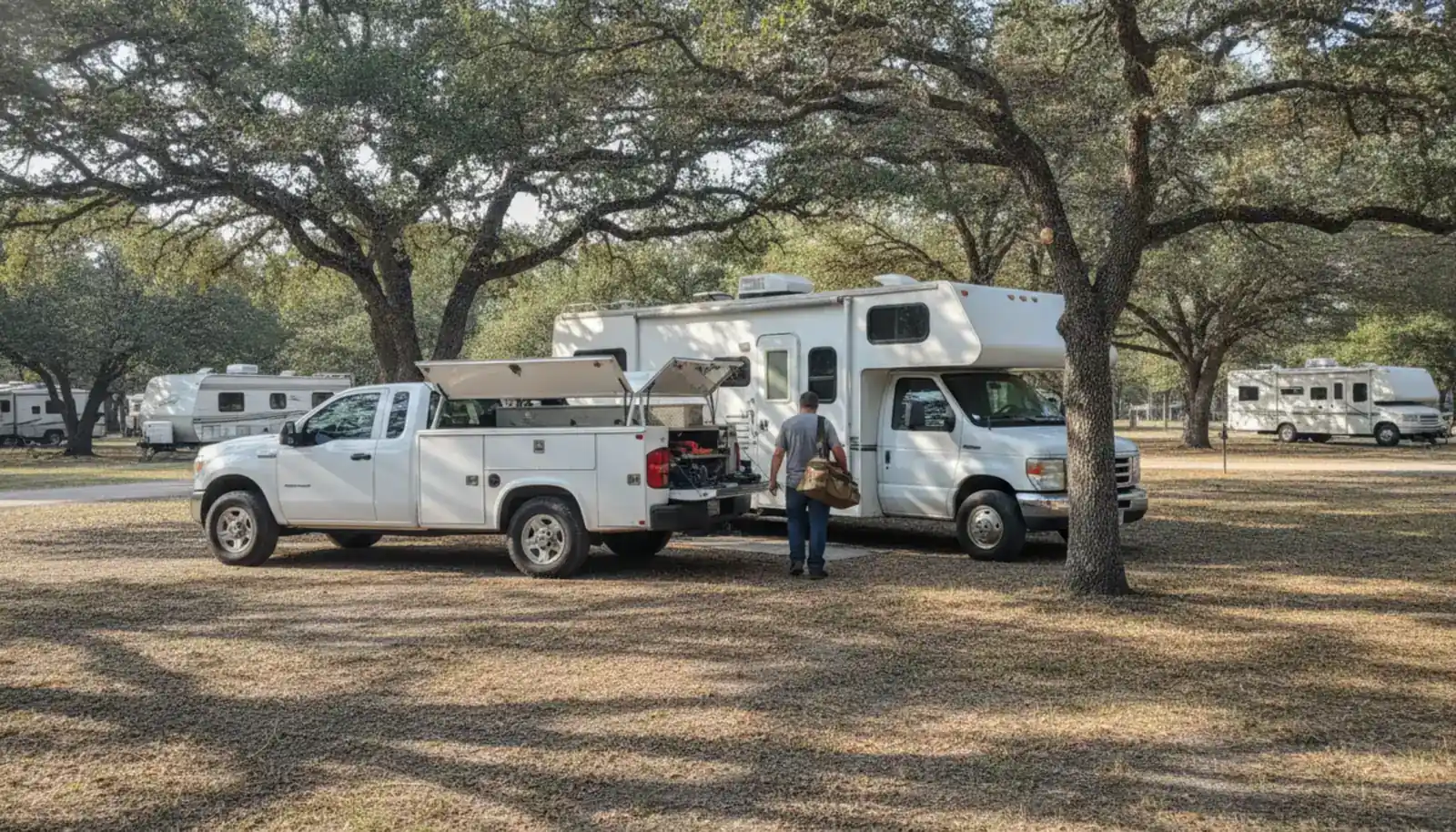
Last August I rolled into a campground at Canyon Lake with my multimeter and a bad attitude, same as any mobile RV repair tech in San Antonio would. Lady swore her rooftop AC was dead. I climbed up, pulled the shroud, found nothing wrong, then checked the pedestal. Breaker tripped. $95 trip charge, ma’am. She laughed. I didn’t. That’s the job. Nine years running a one-man mobile RV repair service out of San Antonio, you learn half the job is knowing what to check before you even touch a screwdriver. The other half is knowing when to walk away.
Mobile RV repair is what it sounds like. We come to you, fix what we can in the dirt or on the asphalt, and charge by the hour plus a trip fee. Sometimes it’s a $15 capacitor. Sometimes it’s a roof that needs a shop. The trick is knowing wich one you’re looking at. If you’re around San Antonio and need somebody to come out, there’s mobile RV repair techs in San Antonio who’ll do the same. Here’s what to expect, and what it’ll cost.
What a mobile tech can fix in your campsite
If it runs on 12-volt or 120-volt, I can usually diagnose and fix it right there. Most of my calls are appliances and electrical. Rooftop AC, furnace, water heater, fridge, converter, slide motors, awnings, generators. Even a toilet that won’t hold water. I carry the common parts: capacitors, sail switches, DSI boards,anode rods, seal kits. If I don’t have it, I order it and come back.
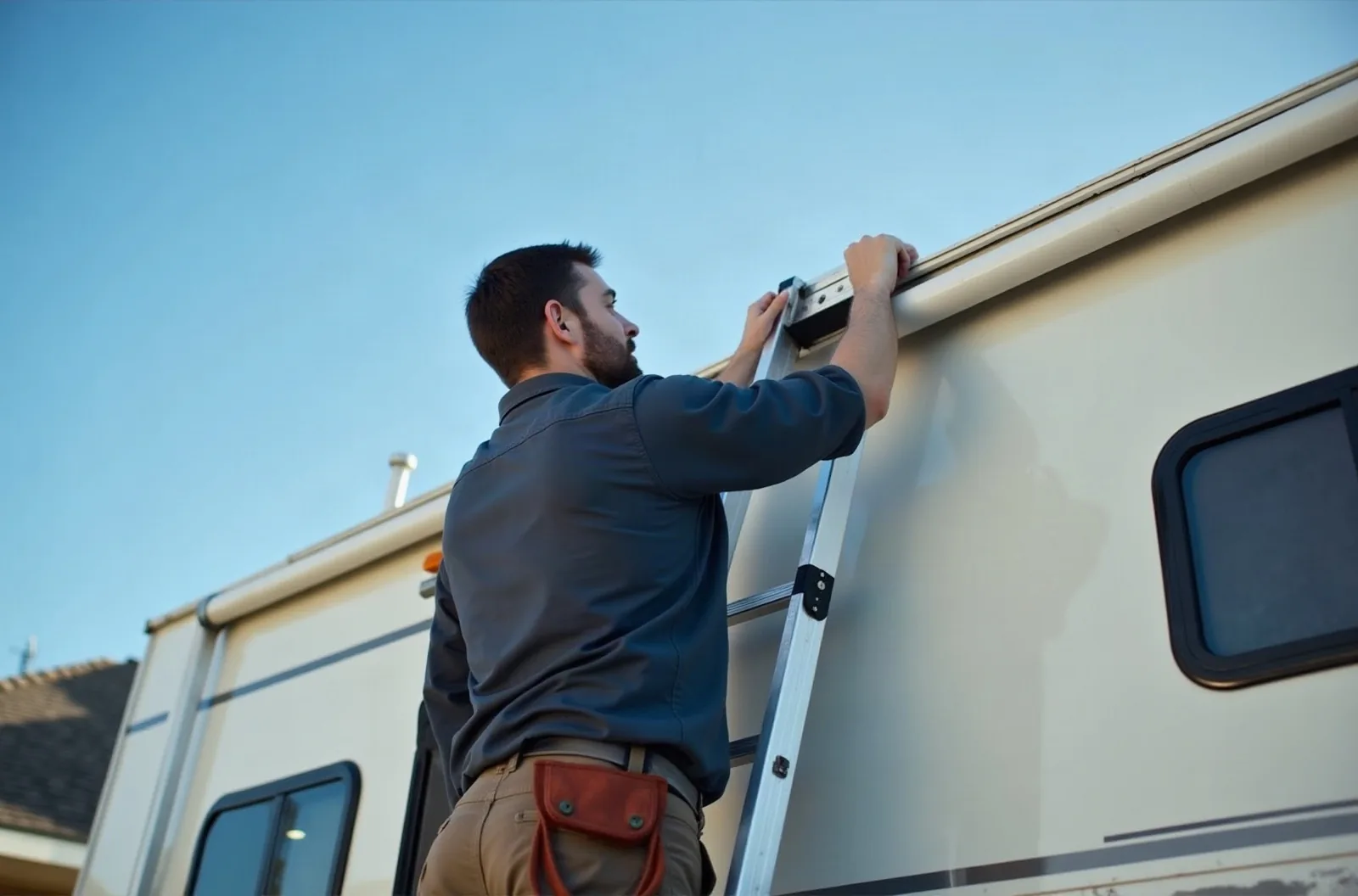
Roof sealing is a big one. I’ll clean and reseal vents, skylights, and seams with self-leveling lap sealant on horizontal surfaces and non-sag on vertical. A small patch or reseal job runs $200 to $800. If the decking is soft, that’s rot, and I’ll tell you to get it to a shop.
But some things need a covered bay and a lift. Frame damage, engine or transmission work on a motorhome, full roof replacement, floor rebuilds. I won’t pretend I can do that in a gravel lot. And you shouldn’t ask me to. A custumer shows me a sidewall bubbling like a bad sunburn from delamination, I give him the bad news and a shop recommendation.
If you’re not in Texas, same rules apply. Look up mobile RV repair techs near you and ask what they handle before you book.
How mobile RV repair pricing works
You’ll pay a trip or call-out fee, usually $75 to $200, then an hourly rate of $100 to $175.
Compare that to a shop: $130 to $180 an hour plus the cost of towing or driving the rig there, and you might wait three weeks for a bay in peak season.
Parts get marked up. And if I have to order a part, you’re waiting on shipping.
Here’s a rough table of common mobile repairs:
| Job | Typical mobile cost | Shop cost | DIY parts |
|---|---|---|---|
| AC capacitor replacement | $100 – $250 | $150 – $300 | $15 – $50 |
| Furnace sail switch | $100 – $250 | $150 – $300 | $20 – $50 |
| Water heater element | $100 – $200 | $150 – $250 | $20 – $50 |
| Roof reseal (vents) | $200 – $800 | $300 – $1,000 | $50 – $200 |
| Awning fabric replace | $300 – $1,000 | $400 – $1,200 | $150 – $500 |
| Slide seal replacement | $300 – $1,000 | $400 – $1,200 | $100 – $300 |
For a deeper look at what shops charge, see this RV repair cost breakdown.
Price changes by rig size and how far I drive. Always ask for a written estimate before I start, and I’ll call you before I go over it.
Scheduling, campgrounds, and questions to ask
In spring and early summer I’m booked out two weeks, sometimes three.
Some campgrounds won’t let outside contractors work on site. Call the office before you book me, or I’ll show up and get turned away at the gate, and you still owe the trip charge.
Before you book any mobile tech, ask hard questions. Are you insured? Certified? What’s the trip fee, and does it apply to the first hour? Do you carry common parts on the truck? Do you give a written estimate? What warranty do you give on labor and parts? How do you take payment?
And look at mobile RV repair techs nationwide to find somebody who’ll actualy answer the phone.
How to prep for the visit
When you call, tell me the symptoms, not your diagnosis.
Take photos before I get there.
Clear me a path. Move the bikes, the chairs, the dog. Have the rig plugged in or the generator ready, and know where your breaker panel is. If it’s a roof job, don’t park under a tree.
And be honest about what you already tried. You poked at a capacitor with a screwdriver and it sparked, tell me. I’ll find out anyway, and I’d rather not get zapped.
When I tell you to go to a shop
Last month a guy called me for a soft spot in his bathroom floor. “Can’t you just screw a board over it?” No. That rot spreads, and you’ll be standing on a hole over your black tank.
I’ll do small floor patches, under a doorway or a table leg. But a full floor replacement needs a covered bay, a dehumidifier, and two guys who can pull cabinets. That’s a $2,000 to $7,000 job. I won’t do it in a campground.
Same with AC refrigerant. Those rooftop units are sealed. If the compressor’s shot, I’m not going to braze in a service port on a picnic table. You need a new unit, about $1,200 to $2,500 installed. I can do that, but I’ll order the part and come back with a helper.
For a full rundown on AC problems, read this guide to RV AC repair.
If I tell you to go to a shop, it’s because I don’t want to get your money for a job I can’t finish right.
I found this video from a crew of working mobile techs where they talk about the most common calls they get. It lines up with what I see on the road.
My tool kit and my limits
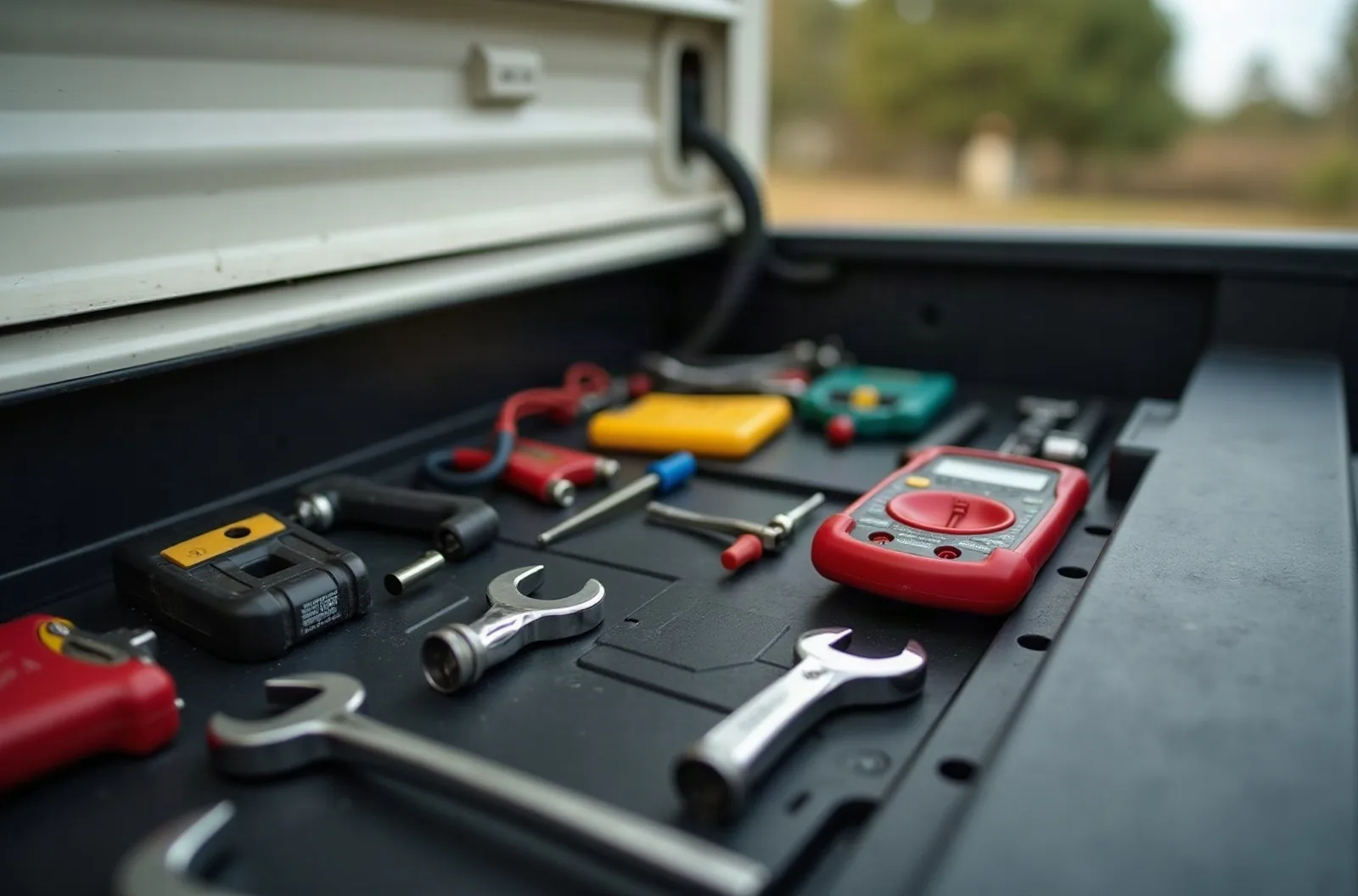
My truck carries a multimeter, a cordless drill, a tube of self-leveling sealant, a box of capacitors, and a six-pack of cold water. I can fix most electrical and appliance problems with that. The rest needs a shop.
I don’t do propane plumbing without a leak detector and a clear head. I don’t work on roofs over 10 feet off the ground without a spotter. And I don’t touch slide mechanisms when the room is racked and the battery voltage is low. Charge the battery first, then call me.
You’d be surprised what a $20 multimeter can save you. Furnace blower runs but no heat? Check the battery voltage before you spend $200 on a sail switch. If it’s under 12 volts, that’s you’re problem. I’ve written that on an invoice more times then I can count.
Next time you’re at the campground, watch the guy in the service truck. Checks voltage before he touches anything, he’s the real deal.
What I’d check this weekend
Get a multimeter and test your battery resting voltage. Should be 12.6 to 12.7 volts full. If it’s 12.2 or lower, charge it. Low voltage kills more RV appliances than any other single cause. I’ve made more money off dead batteries than I want to admit.
Then look at your roof sealant around the AC and vents. If it’s cracked or pulling away, don’t ignore it. A tube of self-leveling lap sealant costs $15 and a roof replacement costs $10,000. Pick your battle.
And if you need me or somebody like me, call two mobile RV repair services and ask for a written estimate. Don’t take the first number. Don’t take the cheapest number. Take the guy who answers the phone and asks what your symptoms are.
If you’re still deciding
FAQ
Do mobile RV repair techs charge to come out?
Yes, most charge a trip or call-out fee, usualy $75 to $200. Some roll that into the first hour of labor, some charge it on top. Ask before you book. If the tech does the repair, the trip fee may be credited toward the total, but not always.
Can a mobile RV tech fix my air conditioner?
Often yes. Common AC problems like capacitors, fan motors, and thermostats are done on site. But if the compressor or sealed system is bad, the whole rooftop unit usually needs replacement. A mobile tech can order and install a new one, but it may take two visits.
What kind of RV repairs need a shop?
Major collision and body work, frame or suspension damage, engine and transmission work on motorhomes, full roof or floor replacements, and large delamination repairs. These need a covered bay, a lift, and more than one tech. A mobile tech should tell you when a shop is the better choice.
How much does mobile RV repair cost per hour?
Most mobile techs charge $100 to $175 per hour, plus a trip fee of $75 to $200. Compared to a shop at $130 to $180 an hour plus towing or drive time, a mobile tech is offen cheaper for small jobs and much more convenient.
Are mobile RV techs insured?
They should be. Ask for proof of liability insurance and any certification, like RV Technical Institute levels. A legit tech won't hesitate to show you. Also ask about warranty on labor and parts. If they balk, find someone else.
Can a mobile RV tech work at my campground?
Sometimes. Many campgrounds restrict outside contractors or require proof of insurance. Call the office before you book a mobile tech. If the park says no, you may need to move the rig or use their approved service. Don't pay a trip fee just to get turned away at the gate.
What should I do before the mobile RV tech arrives?
Describe the exact symptoms, have model and serial numbers ready, take photos, and clear the area around the rig. If it's a roof job, make sure the ladder is accessible and the surface is dry. Plug in or run the generator so there's power for testing.
Find RV repair near you
Compare RV service centers and mobile techs in your city, then ask a few for a quote on the job.
Browse by state