12 Questions to Ask an RV Repair Shop Before You Hand Over the Keys
By Lorna Vick · October 29, 2026
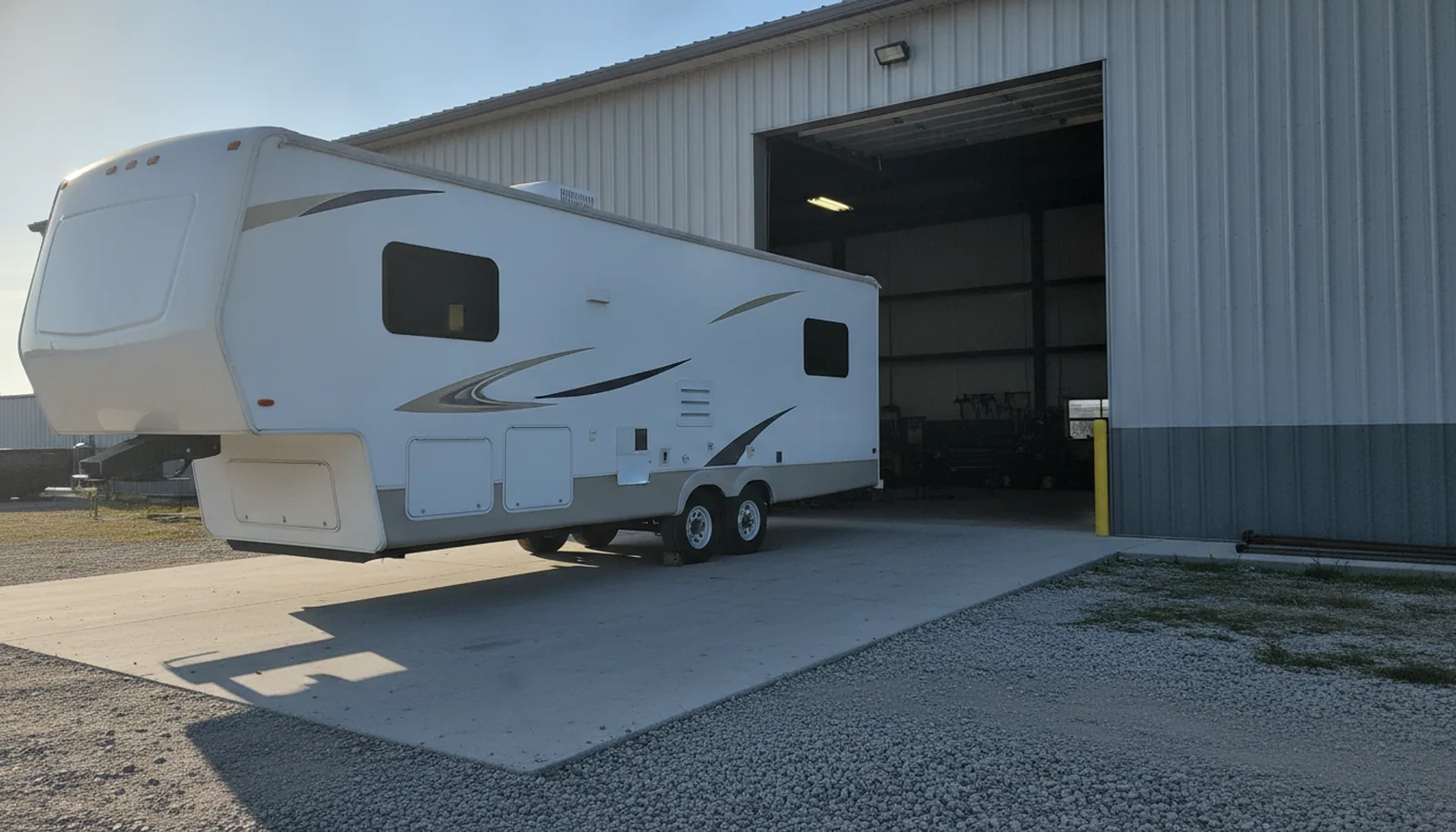
The day my slide-out stopped halfway out, I stood in a Tampa storage lot with a multimeter, watching the voltage drop to 11.8 and thinking about the two weeks I’d just waited to get the rig into a bay for RV electrical repair in Tampa. I did twelve years as a service writer at an RV dealership on Florida’s Gulf Coast, so I knew the questions to ask when comparing RV repair shops across Florida. Most owners don’t. Which is why the front desk sometimes he RV repair shops in Tampaars, ‘You didn’t tell me it would take that long.’ Before you hand over the keys to any RV repair shops in Tampa, pull up the options near you, like the RV repair shops in Tampa, and start asking.
1. Can your bays physically fit my rig?
Ask for the height and length of their service bays, especially if you need RV awning repair in Tampa where the awning has to be fully extended indoors. A Class A or fifth wheel often needs a 14-foot door and a bay that can take the rig’s full length inside. But if you’re stuck, mobile RV repair in Tampa can handle some jobs on-site. My shop had one bay that could just squeeze a 40-foot coach, and the back corner scraped if the tech wasn’t careful, especially during RV AC repair in Tampa when the roof unit had to be reached from a ladder. A good answer is a number, not ‘we work on everything.’ And if they have to work outside, weather and security change the whole picture. When I compared shops across the state, I started with RV repair shops accross Florida by county, then called the ones with tall doors. Mobile RV repair in Tampa is another option when it’s an appliance swap and no bay is needed.
2. How long until it gets a bay at the RV repair shop, and where does it sit until then?
Peak season can mean weeks in the parking lot, so ask where your rig sits and what protects it while it waits. Ask if the lot is fenced, gated, has cameras, and whether your insurance cares. Some policies may have coverage limits for a rig stored at a repair facility after a certain number of days, so check your policy. I’d want a target date for the bay, written on the work order.
3. Do you charge a diagnostic fee, and does it apply to the repair?
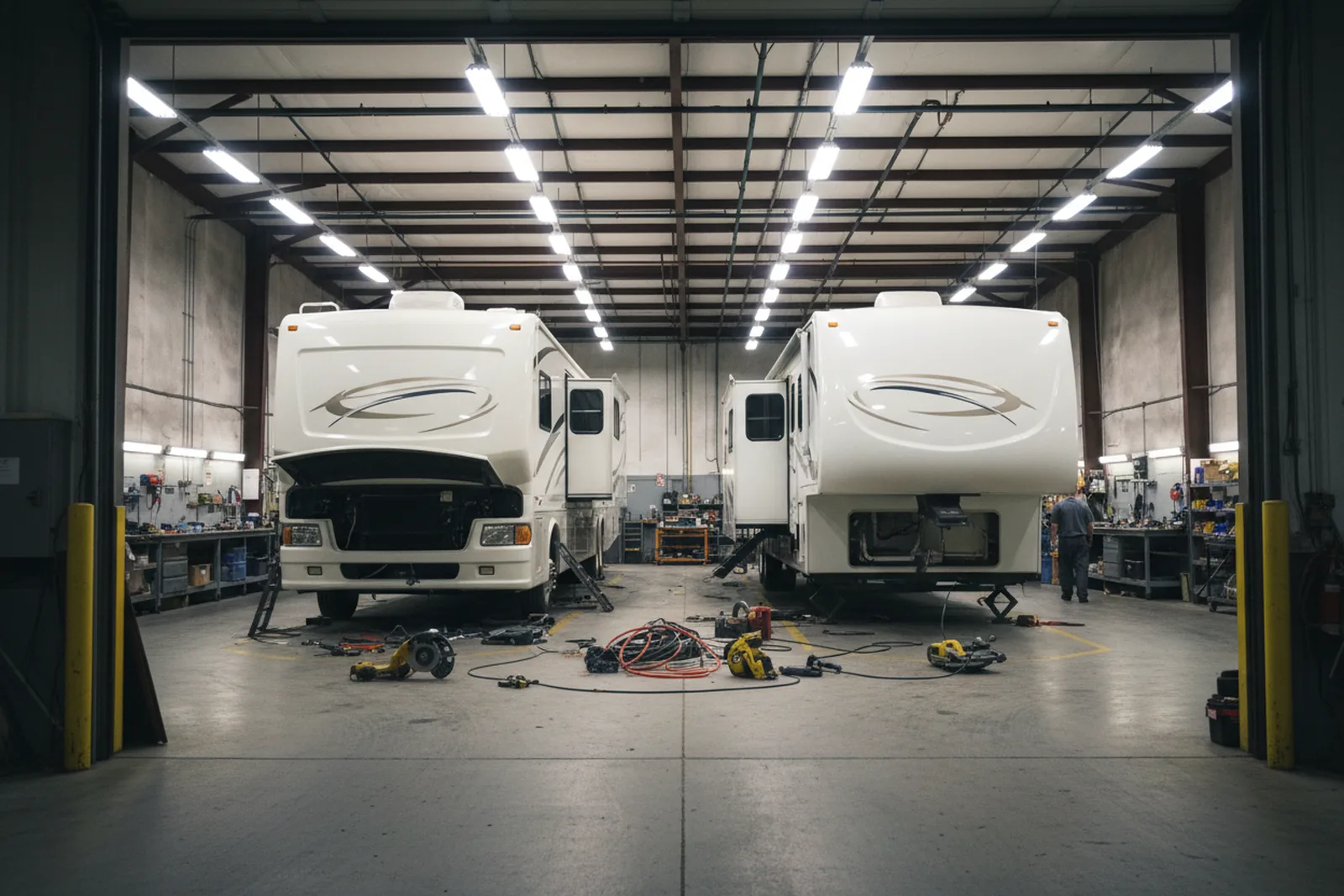
Most shops charge one hour of labor, about $100 to $200, and some credit that amount toward the repair if you approve the work. If not, you’re paying for the diagnosis on top of the fix. Get the diagnostic fee in writing befor the tech touches anything. You can see typical labor and diagnostic ranges in our post on typical RV repair costs.
4. Flat-rate labor or actual hours?
This one decides whether a rusted bolt is your problem or the shop’s. Flat-rate books pay a set number of hours for a job, no matter how long it actually takes. Actual hours are clock time. Ask which one they use, and if it’s flat-rate, what time the book gives for your repair. A water pump that books at 1.5 hours on a rig where the bolts are rusted can turn into a bargain for you or a headache for the tech. So find out before the tech touches it.
5. Will you call me before you go over the estimate?
This is the one that made me sit up straight. A shop that calls when the tech finds something extra, and gets your approval in writing, is doing it right. A shop that just does the work and hands you a bigger bill is doing it wrong. And in many states, that’s against consumer protection rules, though the specifics vary by state. Write it on the estimate.
6. Can I have my old parts back?
Ask to see the old part before you agree to the new one. Many states have rules about returning old parts, but the requirements vary, so ask the shop what there policy is. If a tech tells you a part failed, ask to see it. Shops that refuse or act insulted are a red flag. I mean it.
7. Are your techs certified, and at what level?
Ask specifically about RV Technical Institute levels, which run from Level 1 to Level 4, master. Level 2 or 3 techs are common for most appliance and electrical work. I’d also ask how long the tech has been working on RVs and whether they’ve done a job like yours recently. A tech fresh from a training course is not the same as one who’s replaced two hundred water heaters.
If you’ve ever wondered why RV service takes so long, this video from Rigor RV Repair gives an insider’s view.
8. Do you handle warranty or insurance work, and how is that scheduled?
Dealer shops often put warranty work ahead of retail because the manufacturer pays them. If your rig is under warranty, ask if they’ll process the claim and how long authorizations take. If you’re making an insurance claim for, say, an RV awning repair in Tampa after a wind gust, ask if the shop works with your insurer or expects you to pay upfront and get reimbursed. That second one stings if you’re not ready for it.
9. How do you order parts, and what happens if they’re back-ordered?
A back-ordered part can turn a two-week job into a month of your rig sitting there. Dealers often order from the manufacturer and get parts in a few days to a few weeks, but a back-ordered part can stretch that timeline. Ask if they’ll give you the part number so you can search yourself. Independent shops can sometimes source from local distributors or salvage, which is faster. Ask if they’ll give you the part number so you can search yourself. You’d be surprised how often that moves things along.
10. When do storage fees start after you call and say the rig is done?
Some shops start charging a daily storage fee if you don’t pick up within a few days of the completion call. Others give you a week. Ask in advance, and get it in writing. If you can’t pick up promptly, ask if they can work with you or if a friend can move the rig. Because I have watched that daily fee eat a customer alive.
11. What warranty do you give on labor and parts?
Common answers: 90 days on labor, manufacturer warranty on parts, or 12 months/12,000 miles on some major repairs. Ask if the warranty is nationwide, if it transfers to a new owner, and what it excludes. If the shop hesitates or says ‘we take care of you,’ get it in writing anyway. A one-year labor warranty is a sign of confidence. A 90-day deal is still fine for small stuff. And always ask about the specific part: a rebuilt brake caliper might carry 30 days.

12. Will you send me photos of what you find?
A tech with a smartphone should be able to send you a photo of the cracked sealant on your roof or the burned wire behind your converter, and if you’re weighing a DIY patch, our guide to repairing RV roof leaks covers when the decking says call a pro. This isn’t just about trust; it’s about education. You learn what the part looks like and how it failed. I’ve had customers approve a repair because the photo made it real, and I’ve had customers catch a mistake before it became a bigger problem. So if the shop says no or charges extra for photos, ask yourself why. With an RV AC repair in Tampa, a photo of a bad capacitor is worth a paragraph of phone description. And if the problem is a dead outlet or a slide that wont move, an RV electrical repair in Tampa shop shoudl be able to show you the charred terminal.
The one thing I’d do differently
I’d never drop a rig off without a written estimate that includes the diagnostic fee, the flat-rate or hourly shop rate, a dollar trigger for an approval call, and a pickup deadline, that piece of paper has saved me more money than any negotiation I ever sat thru. I’ve also learned the best shops are the ones that answer these twelve questions without flinching. A shop that flinches is trying to figure out which answer you’ll accept.
This weekend, pull up the RV repair shops near your zip code or campground, pick two, and call them with this list. Ask for a written estimate even before you tow. The shop that sends you a clean estimate with no games is rare. It’s worth driving an extra thirty miles.
If you’re still deciding
FAQ
How much does a typical RV repair shop charge per hour?
Most shops charge $100 to $200 an hour, with $130 to $180 common in larger metros. Mobile RV techs often charge a trip fee of $75 to $200 plus $100 to $175 an hour. Always ask whether the shop uses flat-rate labor guides or actual clock hours, and get the rate in writing on the estimate.
What is a diagnostic fee and do I have to pay it?
A diagnostic fee is usually one hour of labor, about $100 to $200, for the shop to find the problem. Many shops apply that fee to the repair if you approve the work. Some waive it for simple checks. Ask before you leave the rig, and never okay a diagnosis over the phone without knowing the fee.
How can I tell if my RV repair shop is reputable?
Ask for certifications (RVTI levels 1-4), check how they handle estimates and old parts, and look for a written warranty on labor. A good shop explains what they found with photos, calls before exceeding the estimate, and gives you a realistic timeline. Read local reviews, but weigh recent, detailed ones more heavily. The one that says 'fixed my slide, showed me the bad gear, $40 over estimate so they called me' tells you more then fifty that say 'great service.'
Do I need a shop with a tall bay for a 30-foot travel trailer?
Most travel trailers are around 10 to 11 feet tall and fit under a standard 12-foot door, but a fifth wheel or Class A often needs a 14-foot door or more. Ask the shop for the bay height and lenght in feet before you tow. If the work is only on the roof, a mobile tech can sometimes do it in your driveway.
What should I do if the repair cost turns out way more than the estimate?
Stop work and ask for a written explanation and photos. Many states have rules about getting approval before exceeding an estimate, but the specifics vary, so check your state's consumer protection laws. If you didn't authorize it, you may not have to pay. A good shop calls before doing extra work; a bad one surprises you at pickup. The surprise is the tell.
How long will my RV sit at the repair shop before they start work?
In peak season, some dealer service departments are booked out weeks, and a month is common. Many shops park your rig outside until a bay opens. Ask about wait time, whether storage fees start after they call you to pick up, and if the lot is secure. Booking fall or winter repairs can get faster service.
Can I get a mobile RV repair instead of taking my rig to a shop?
Yes, and it's often cheaper for appliance, electrical, roof, slide, or awning work. Mobile techs come to your site, saving towing and storage. They charge a trip fee plus hourly labor. Check they are insured, certified, and give a written estimate. Major frame, body, or major roof work usualy still needs a shop.
Find RV repair near you
Compare RV service centers and mobile techs in your city, then ask a few for a quote on the job.
Browse by stateOr jump to: Las Vegas, NV · Elkhart, IN · Jacksonville, FL